Студенти ТНПУ ім.В.Гнатюка
та ЧНУ ім.Ю.Федьковича відвідали
Мандрівний кінофестиваль «Docudays»
16, 17 та 19 жовтня за сприяння Кіноклубу Docudays при ТНПУ імені Володимира Гнатюка та факультету іноземних мов ЧНУ ім.Юрія Федьковича відбулися три зустрічі у рамках Мандрівного кінофестивалю Docudays на Тернопіллі. Студентам обох університетів було запропоновано до перегляду три документальні кінострічки.
Олександр Степаненко - координатор Мандрівного кінофестивалю
«Фіуме або смерть!» - фільм хорватського режисера Ігора Безіновича. Фіуме – це колишня італійська назва сучасного хорватського міста Рієка, що на Адріатичному узбережжі. Історія Фіуме-Рієки дуже подібна на історію Лемберга - Львова, Станиславова-Івано-Франківська, Тарнополя - Тернополя…. Ці наші міста також не раз змінювали свої назви. Над їхніми ратушам протягом ХХ століття також 7 – 8 разів помінялися кольори державних прапорів. Кожне з цих міст було поліетнічним. Кожне – пережило періоди диктатур та хаосу, погромів, політичних репресій та етнічних чисток. Автори фільму намагаються в театралізованій гротескній формі відтворити контраверсійні моменти історії Рієки. Вони торкаються також питання про роль діяча культури в підтриманні своєї нації в межах тієї культури.Адже історія знає чимало випадків, коли суспільства ніби випадали з культури - внаслідок воєн, революцій, встановлення тоталітарних режимів з їхньою агресивною пропагандою. Стрічка отримала нагороду «Тигр» і приз FIPRESCI на Міжнародному Роттердамському кінофестивалі 2025 року.
«Моя золота дитина» від молодого режисера Маартена де Шуттера – нідерландська, щемка і вдумлива документальна історія. Його мати Мартіна де Шуттер трагічно загинула у липні 2014 року, у збитому малайзійському боїнгу МН-17. Тепер Маартен намагається зберегти пам’ять про неї та жити далі.
Третій фільм «Скло». У цьому оригінальному й кумедному автопортреті, коливаючись між надією, відчаєм і душевним болем, Рогір Капперс прагне здійснити мрію, яку він мав у девʼять років, — стати відомим музикантом, який грає на скляному органі. Що це — безмежний оптимізм чи наївна імпульсивність?
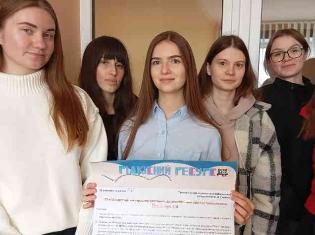
Студенти ТНПУ - учасники фестивалю
Студенти поділилися своїми враженнями.
Мар‘яна Дармограй:
The documentary “Fiume or Death!” explores a turbulent chapter in European history — the 1919 occupation of the city of Fiume (now Rijeka) by Italian poet and nationalist Gabriele D’Annunzio. Through a compelling mix of archival materials, interviews, and artistic visuals, the film reconstructs the atmosphere of that time and examines how ideology, power, and patriotism shaped the actions of individuals and entire societies. It reveals the complex relationship between art and politics, showing how cultural influence can be used to justify aggression. At the same time, the film invites viewers to reflect on the present. By giving voice to the people of modern Rijeka, it connects past events with current discussions about nationalism, identity, and collective memory. The poetic cinematography and thoughtful narration create a reflective tone that encourages critical thinking rather than simple judgment. “Fiume or Death!” is not only a historical documentary but also a moral reminder about the consequences of blind devotion to power and ideology.
Юлія Град:
This film presents a powerful and unconventional story about one of the most unusual episodes in European history. In 1919, the Italian poet and soldier Gabriele D’Annunzio led a group of followers to seize the city of Fiume, which is now known as Rijeka. For 16 months, the city became a strange experiment — a mix of nationalism, rebellion, art, and chaos. The film portrays this period not in a romantic or heroic way but with raw honesty and a strong energy.
Through interviews, archival materials, and creative visual language, the filmmakers show how the residents of Fiume remember and reinterpret this chapter of their past. The contrast between official history and personal memories gives the story depth and complexity. The film raises important questions about power, freedom, identity, and how history is told. This is not a typical historical film. It is intense and sometimes uncomfortable, but it leaves a strong impression. It shows that history is not just something written in books — it is something living in people’s minds, emotions, and culture.
Ольга Юркевич:
After watching “Fiume or Death!”, I was deeply impressed. The film captivated me with its atmosphere and meaningful story — from the very beginning, it immerses you in a complex historical period where the fight for ideals intertwines with the characters’ personal emotions. I especially liked how the director conveyed the spirit of the time through music, costumes, and details. The movie makes you think about what true freedom really is and where the line lies between devotion to an idea and fanaticism. It’s not just a historical drama — it’s a story about human emotions, choices, and consequences. After watching it, I felt as if I had actually lived through those events.
Назар Мартищук:
This movie represents chaotic aftermath of World War I, Italy is gripped by political unrest and a sense of betrayal. Many Italians believe their country was denied rightful territorial gains in the Treaty of Versailles — particularly the city of Fiume, which has a large Italian-speaking population but was awarded to the newly formed Kingdom of Serbs, Croats, and Slovenes.This movie is not for kids , even every adult can watch this movie. Many bad things are shown in this movie. I recommend this movie only if you are extremely interested in history because it is really hard to watch without tears. This is very usefull,almost for everyone.
Інна Боднар:
The film Glass - "My Unfulfilled Life" leaves a deep emotional impression. It is not just a story about a person, but a metaphor for the fragility of human dreams and hopes. Glass symbolizes not only fragility but also transparency through it, we see the inner world of the protagonist, his fears, memories, and unfulfilled dreams. The atmosphere of the film is melancholic but honest, forcing the viewer to think about how often we put our lives “on hold” . The visual effects are minimalist and cold-toned, which makes the loneliness feel even stronger. The music is especially powerful it sounds like the echo of a soul trying to break free from silence. The actors' performances are deep and sincere, without false pathos. The film leaves behind a feeling of sadness, but also a quiet hope that even an unrealized life can become art. This is a film that you want to watch again to find your own reflection in it.
Ліля Костенко:
Фільм «Моя золота дитина» справив на мене сильне враження. Це історія сина, який у дитинстві втратив маму і тепер намагається згадати її обличчя, голос і любов. Його мати загинула, коли ракета збила літак. У фільмі відчувається глибокий смуток і водночас велика ніжність до матері. Ця історія допомагає краще зрозуміти людей, які пережили втрату. Вона нагадує, як важливо берегти пам’ять і цінувати кожну мить із тими, кого любимо.
Обговорення проглянутих стрічок
Дякуємо Олександру Степаненку та Docudays за можливість перегляду актуальних фільмів.
Наталія Пасічник, Людмила Загородня, Галина Краса, Наталія Закордонець, Раїса Чорній, Наталія Ящик, Олександр Шевчук, Анна Косенко, Олександр Сорочан